Why Arizona Is a Top Destination for High-Net-Worth Real Estate Buyers in 2026
In 2026, high-net-worth (HNW) buyers are not simply relocating — they are strategically repositioning capital.
Arizona — particularly Paradise Valley and Scottsdale — has emerged as one of the most compelling luxury real estate destinations in the United States.
This is not a trend built on hype. It is driven by measurable economic, tax, and demographic forces that sophisticated buyers understand well.
1. Tax Efficiency Without Sacrificing Lifestyle
Arizona offers a 2.5% flat state income tax — dramatically lower than California, New York, and Illinois.
Equally important:
- Effective property tax rates average approximately 0.6%
- No municipal property tax in Paradise Valley
- Estate-sized lots without coastal-level carrying costs
For ultra-high-net-worth families, this difference compounds meaningfully over time.
Paradise Valley provides estate-scale privacy with materially lower annual overhead than Beverly Hills, Palm Beach, or Aspen.
2. The “Silicon Desert” Economic Expansion
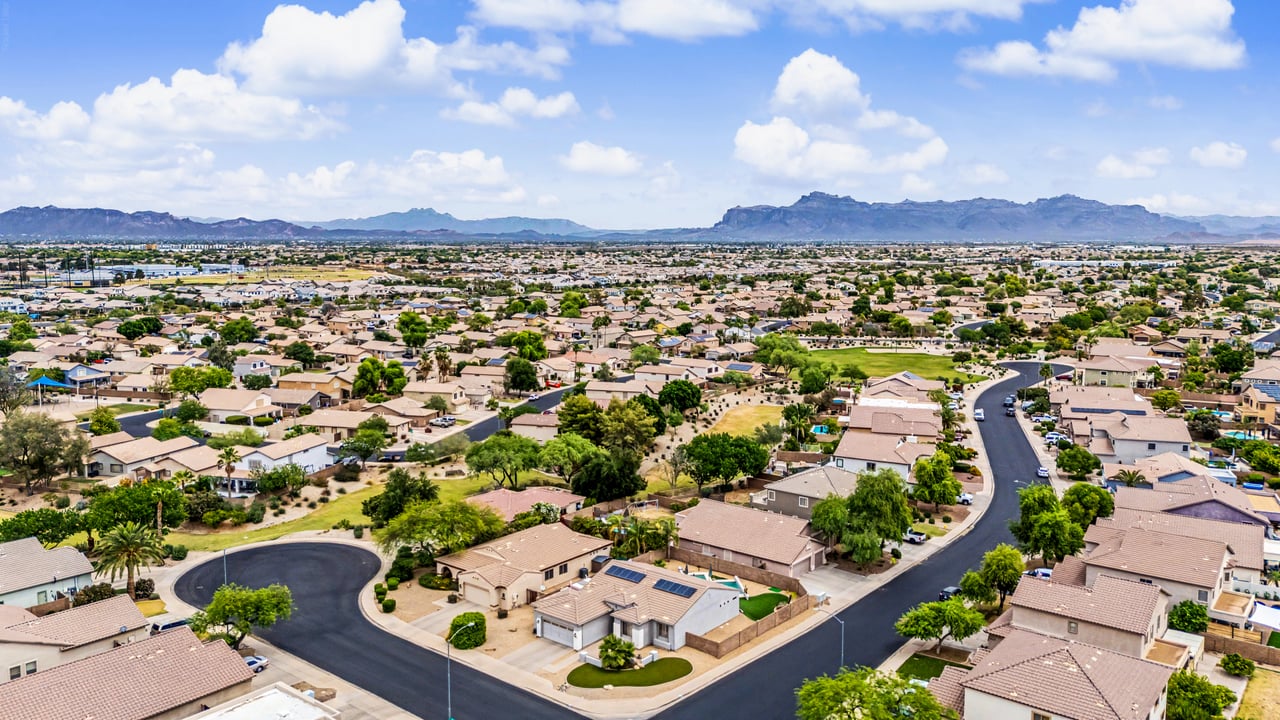
Silicon Desert real estate boom
Arizona is no longer a secondary relocation market.
The state’s technology and semiconductor expansion — often referred to as the “Silicon Desert” — continues to attract founders, executives, and institutional capital.
Major corporate relocations and semiconductor investments have accelerated wealth migration into the Phoenix metro.
Scottsdale and Paradise Valley benefit directly because luxury buyers prefer proximity to:
- Executive offices
- Private aviation access
- Resort infrastructure
- Private schools and golf clubs
This is not speculative growth. It is infrastructure-backed migration.
3. Resilient Luxury Demand & High Cash Concentration
Unlike many coastal luxury markets, Paradise Valley maintains a high percentage of cash transactions in the $5M–$15M segment.
This matters.
A strong cash-buyer concentration insulates the market from interest-rate volatility and reduces forced selling pressure.
At the ultra-luxury tier, capital preservation and long-term positioning outweigh short-term rate shifts.
In 2026, that stability is a competitive advantage.
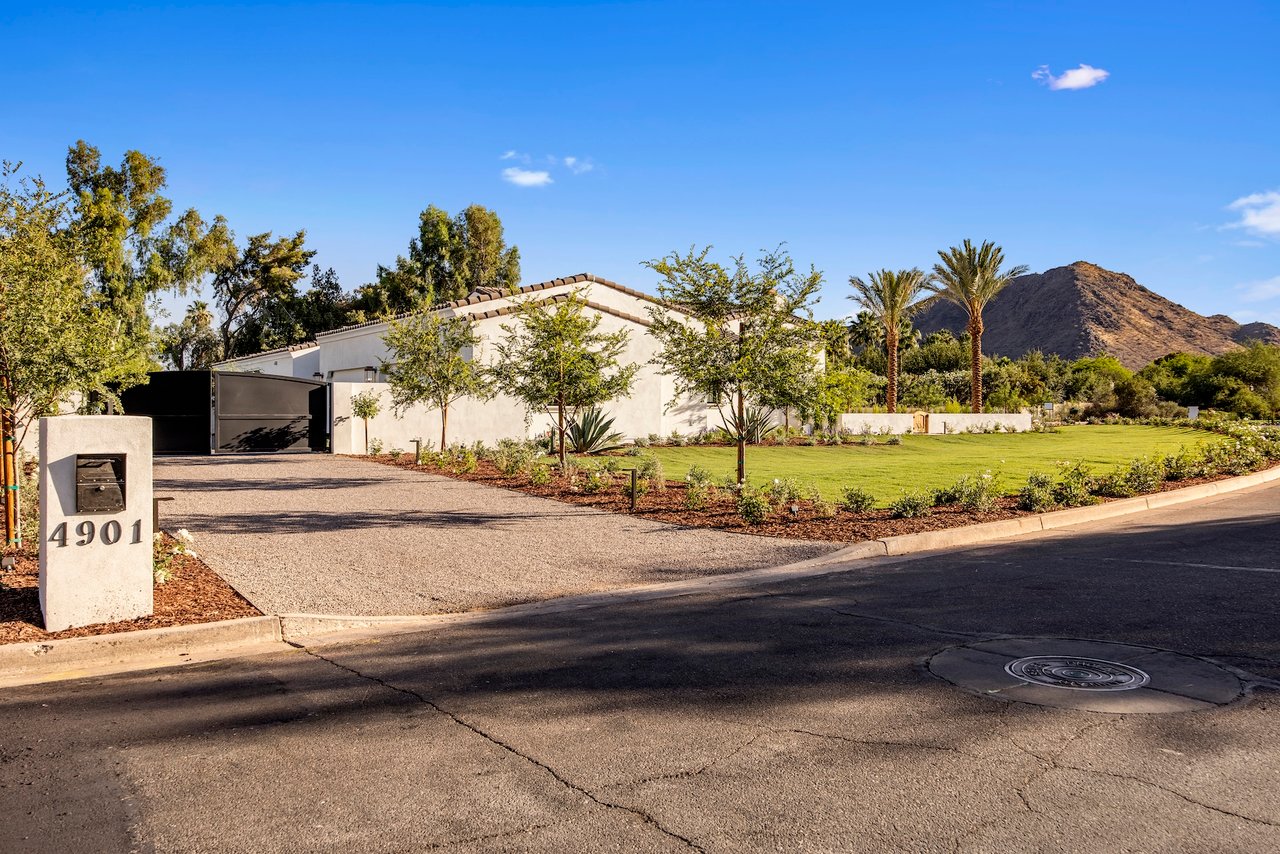
4. Scarcity of Land in Paradise Valley
Paradise Valley is uniquely protected:
- One-acre minimum zoning in most areas
- Strict building parameters
- No dense multifamily intrusion
- Limited remaining premium teardown inventory
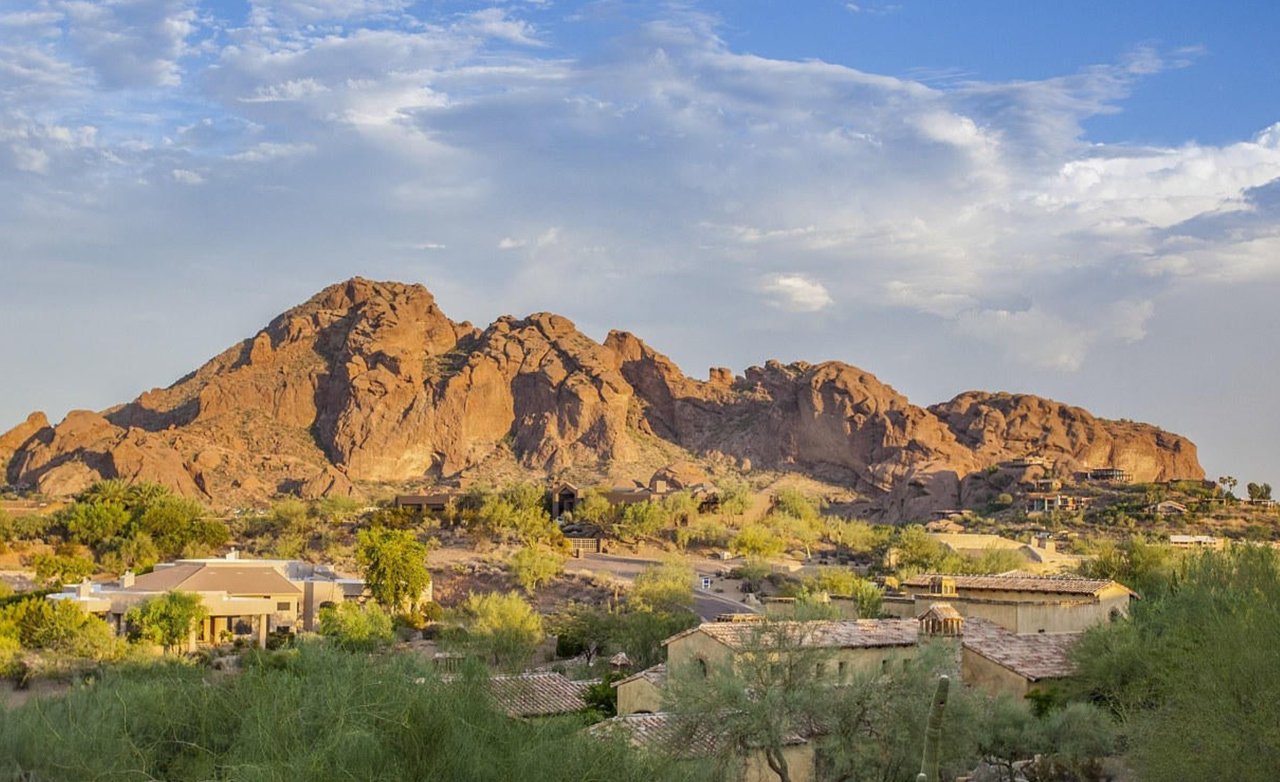
True estate lots near Camelback Mountain are finite.
High-net-worth buyers understand land scarcity better than anyone.
5. Lifestyle Without Compromise
Scottsdale and Paradise Valley offer:
- 300+ days of sunshine annually
- World-class golf and private clubs
- Proximity to Sky Harbor International Airport
- Resort-level dining and hospitality
- Immediate access to hiking, mountain views, and desert serenity
This combination — tax efficiency + economic growth + luxury lifestyle — is rare in one market.
Arizona delivers all three.
What This Means for Luxury Buyers in 2026
HNW buyers are increasingly viewing Paradise Valley not as a seasonal secondary market — but as a primary wealth-preservation geography.
The most decisive buyers are focusing on:
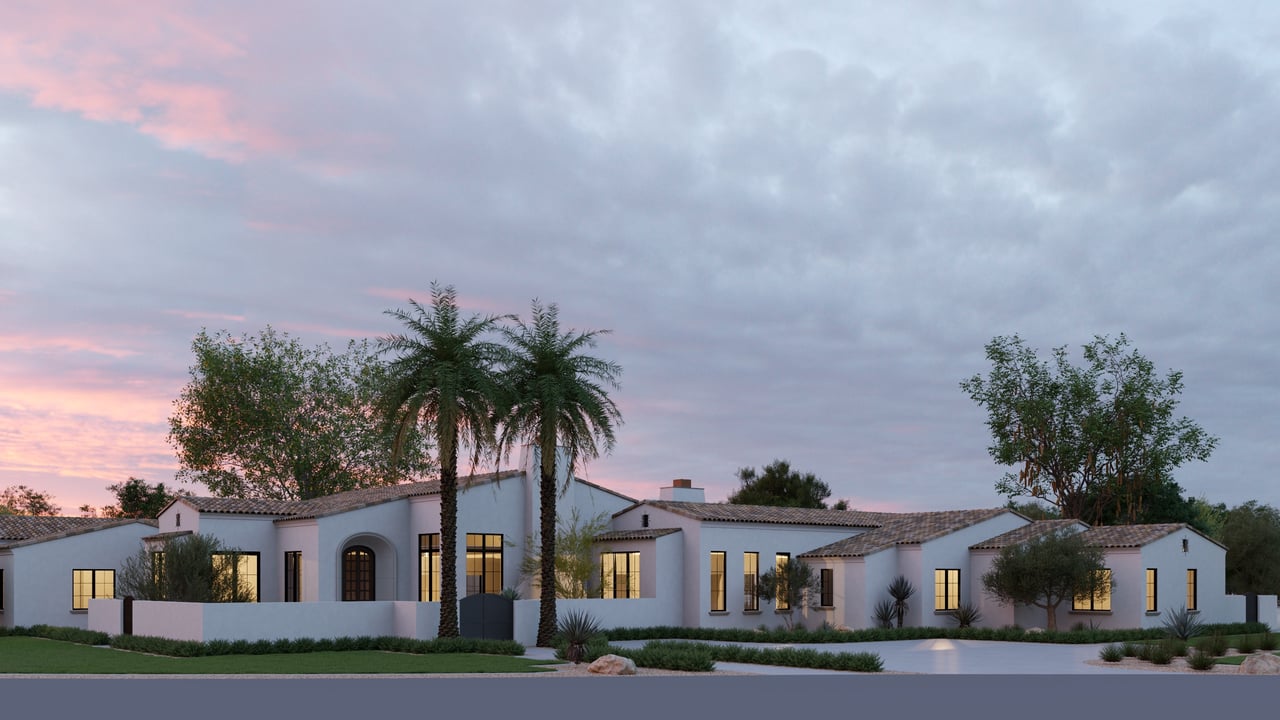
- New construction with modern building science
- Large lots with privacy buffers
- Architectural integrity over trend-driven design
- Turn-key execution to avoid build timelines
Properties that align with those standards continue to move with velocity.
A 40-Year Market Perspective
Having represented luxury real estate through multiple economic cycles, I can say with clarity:
When migration is supported by tax reform, infrastructure investment, and capital inflow — it sustains.
Arizona’s current momentum is structural, not speculative.
For high-net-worth buyers evaluating their next strategic move, Paradise Valley and Scottsdale remain two of the most compelling luxury markets in the country.
Denise van den Bossche
Associate Broker | Exec-Elite
40 Years Representing Paradise Valley & Scottsdale Luxury Real Estate